
I have a confession to make. I’m an addict.
By Dave Waite • September 24, 2026
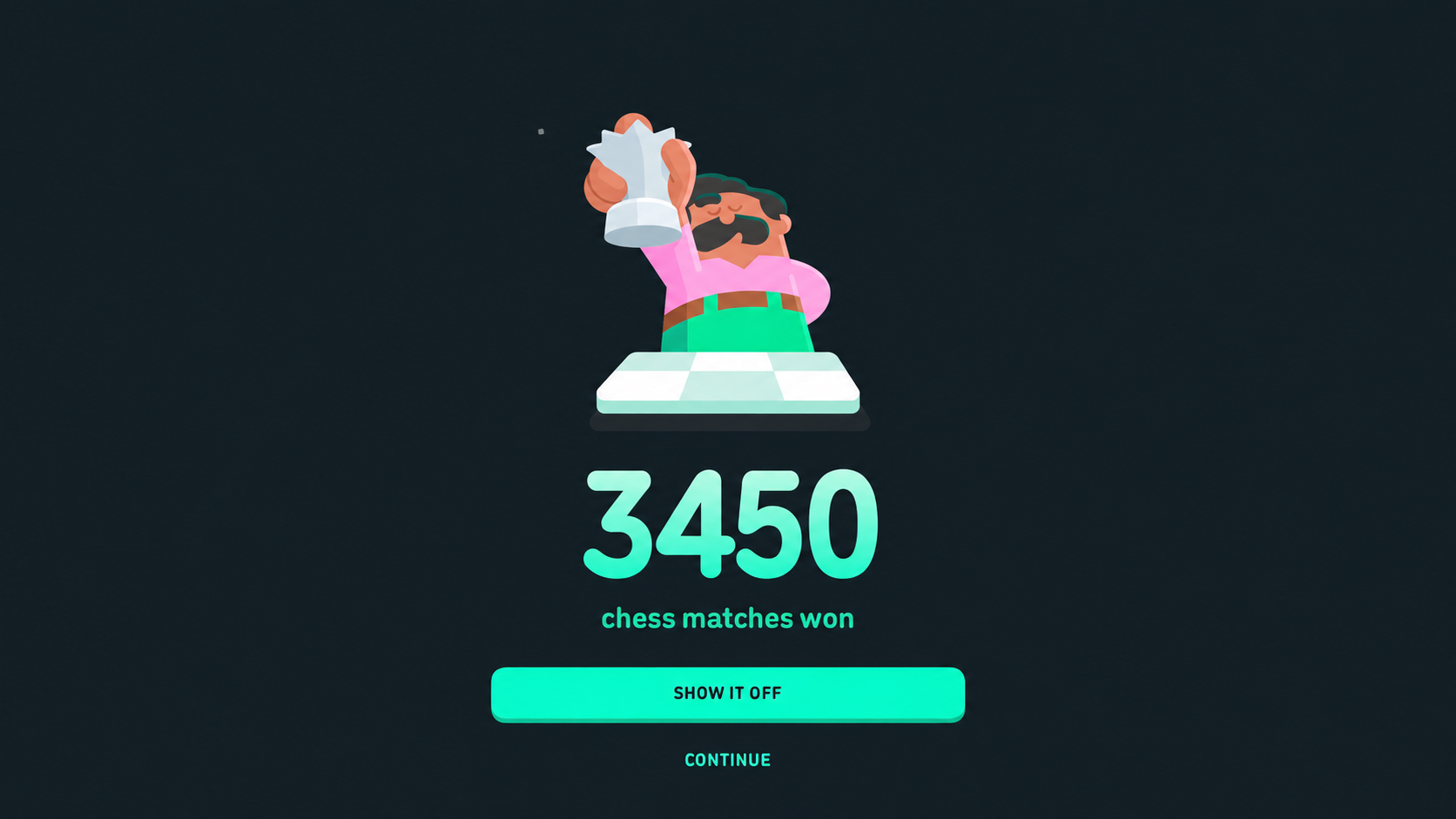
Hi, my name is Dave. And I’m an addict.
And I need to give you fair warning so you DO NOT make the same life mistake I did.
I first signed up for Duolingo a dozen years ago. I’ve dabbled in learning Norwegian and refreshing my Russian, then was making my way through the Spanish lessons. All seemed like a perfectly reasonable use of my time. Learn a language. Exercise the brain. Be ready for travel in much of the Spanish-speaking world…
Then Duolingo introduced a new “language” to learn in spring of 2025.
I’m about to give you a warning that could be life-altering.
Do NOT, under any circumstances, start playing the chess app on Duolingo.
It is highly, highly addictive.
I’m telling you this so you have a chance to save yourself.
You have things to do. People who care about you. Plans that don’t involve a cartoon man named Oscar with a magnificent mustache.
Last year’s big initiatives around here were getting our new Zookeeper site up and trying to hit a golf ball straight. Somewhere between those two projects, I apparently decided I needed another game that could make me question my judgment.
The irritating part is that I run an animation studio. I spend my working life thinking about how characters connect with people. You’d think I’d have some immunity to this.
Apparently, knowing how something works does very little to protect you from it.
Duolingo eases you into chess through short lessons and puzzles, with its character Oscar serving as your coach. You work through a problem, try a tactic and eventually put things together in matches. It gives you something manageable to figure out rather than dropping you in front of a board and wishing you luck.
That’s dangerous territory for me. Give me a problem I can almost solve and I’m going to want another crack at it.
Then there’s the familiar Duolingo business of keeping your streak alive and accumulating XP. Chess lessons count toward that streak, too, so there’s very little standing between a respectable language-learning habit and whatever this has become.
The whole thing comes with an excellent excuse: I’m learning. This is good for me. Surely this is better than whatever else I could be doing on my phone.
You can get away with quite a lot under the heading of self-improvement. Plus my dog Puck needs walks, so you can always squeeze in a game in the elevator ride downstairs, right?
But the game mechanics are only part of what interested me. I keep coming back to the characters and the animation.
Look at Oscar. A chess tutor could have been a voice explaining moves or a box of instructions beside the board. Instead, Duolingo gave the job to one of its existing characters and built his personality into the lessons.
That’s rather brilliant. Chess can feel pretty intimidating when you’re learning it. Having a slightly ridiculous character there takes some of the starch out of the experience. It gives you permission to enjoy yourself before you’re any good.
And the little animated moments matter. A reaction. A pause. An expression that makes a character feel pleased with himself. Those are the details we notice in our work, too. You can spend a surprising amount of time getting something that lasts half a second to feel right.
When it works, nobody thinks about the half-second. They just like the character.
Duolingo has put some serious money behind that kind of work. It acquired Detroit animation studio Gunner in 2022, then motion design studio Hobbes in 2024. In August 2026, it added London’s Animade.
My attention was piqued when an education company started buying animation studios.
That’s a fairly substantial vote of confidence in the people who make these experiences enjoyable. Duolingo has explicitly tied those investments to making its products more engaging and giving learners reasons to return. The animation team is being asked to help solve a business problem that every learning product has: getting people to keep going.
As a studio owner, I find that encouraging. There’s a lot more we can do for a business when we’re involved in how the experience works, rather than brought in at the end with a request to liven things up.
There’s also some clever technology underneath all that personality. Duolingo uses Rive for interactive character animation, allowing movements and expressions to respond to what’s happening in the app. Its speech-animation system coordinates mouth movements with audio without requiring an animator to handle every sentence individually. Duolingo needed to animate dozens of characters across hundreds of courses without inflating app size. Rive’s compact format makes this possible. And with Rive, animations are state-driven. State machines manage complex transitions—like idling, speaking, celebrating, or reacting to answers—making each character feel responsive. It’s an excellent case study of combining animation and technology for exceptional user experiences.
For the video-call feature with Lily, Rive lets the team combine expressions and gestures in real time. She can appear to listen, think or react rather than sit there waiting for the next bit of dialogue.
Most people will never care what software is doing that. Nor should they have to. They’ll care whether the character feels awkward or convincing, whether the joke lands and whether they enjoy being there.
That’s the part I find easy to lose sight of when the conversation gets too technical. All that engineering and animation work is there to make a moment feel natural.
The chess course certainly found an audience quickly. In its Q2 2025 shareholder letter, Duolingo reported that chess had passed one million daily active users by the end of June. The company said it had grown faster than any other subject it had launched, including language learning. At that point, it was still limited to iOS and English.
I wouldn’t credit a million daily users to Oscar’s mustache…there are plenty of reasons someone might try a chess course. But I wouldn’t dismiss the contribution of making the whole thing feel welcoming and funny, either.
And Duolingo has given its characters somewhere to go beyond the lessons. It worked with Titmouse on The Final Test, an anime-inspired series. And they’ve also launched other mini-brand films over the last year. Once you’ve developed characters with enough personality, you can start putting them in situations people might actually choose to watch.
You also give people something worth sharing. I’m much more likely to send a friend something that made me laugh than a company’s announcement about its latest features. The character gives us something to talk about besides the product.
A character needs a job. In a learning experience, that might be helping someone through the awkwardness of being a beginner. Somewhere else, it might be explaining something confusing or making an otherwise forgettable interaction enjoyable.
I’d rather start there than with a conversation about what the mascot should wear.
What’s happening when someone meets this character? Are they confused? Bored? About to give up? What could the character do that would make that moment better?
Then you have something to build a personality around. The humor has a purpose. The animation has something to communicate. And you have a reason for the character to keep showing up.
That’s the work we love. Figuring out who a character is and what people might enjoy about spending time with them. Duolingo gives me plenty to admire on that front, even while interfering with my plans to become conversational in Spanish.
Anyway, consider yourself warned.
I went in to learn a language and came out with a grudge against a cartoon chess coach.
I’m calling it professional research. Send help.
 Let's make some noise together
TAP THE GLASS
WE DARE YOU.
Hello@Zookeeper.com
Or call the Zoo hotline at 323-652-2887
 Be in the know
Join Our
Newsletter
We’ll alert you to our freshest work and give a behind-the-scene look at how it came together.